


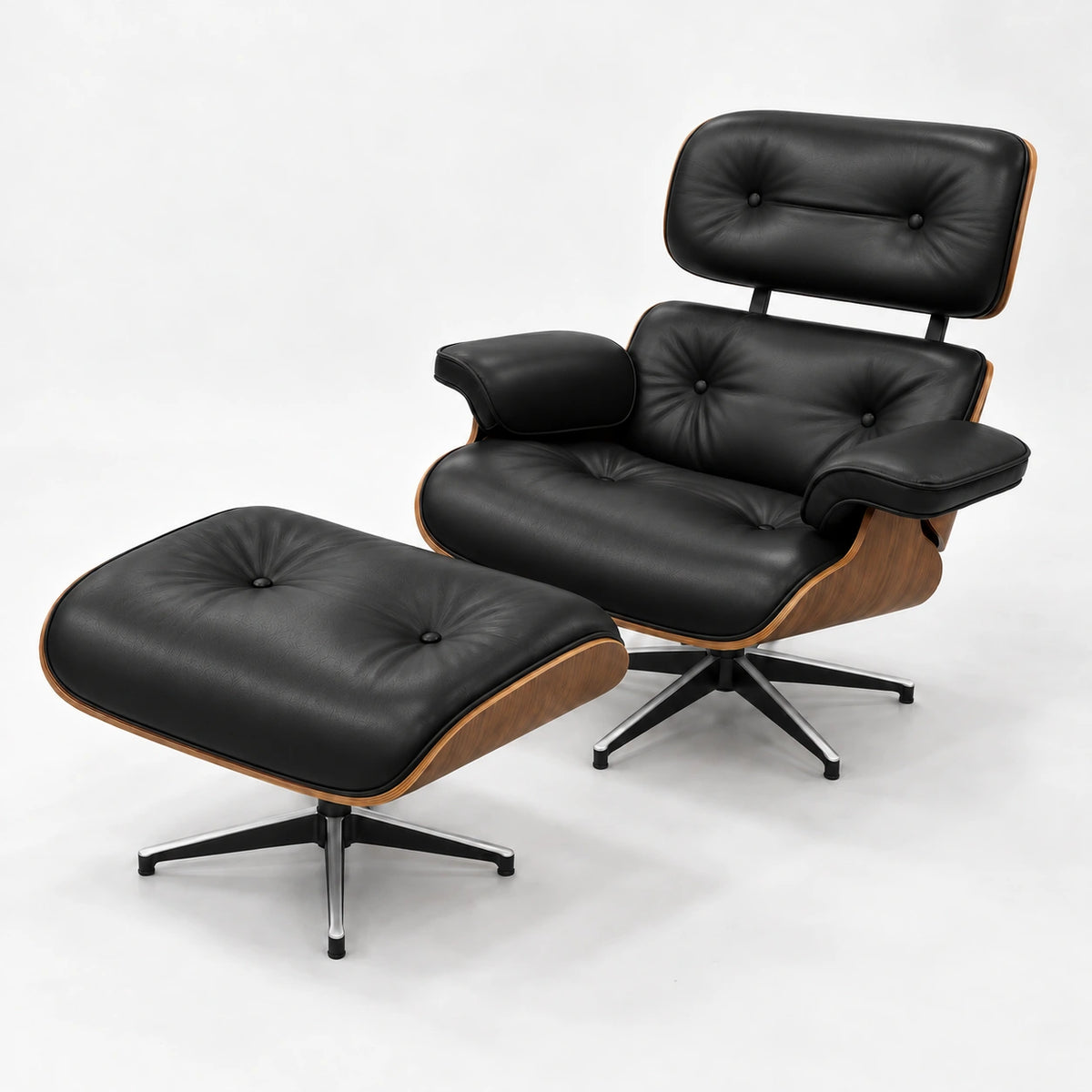

A reading corner works when you can sit down, reach your book and drink, and see the page without shifting the furniture. Plan the chair, a place to set things down, a lamp and its power route as one layout. Test those movements in your room before choosing a narrow table or a lamp type.
Start with what you actually do in the chair
List the things you reach for during a typical reading session: a book or tablet, glasses, a cup, a phone and perhaps a charger. Notice which hand you use for each. Sit in your current chair and mark a comfortable place to set them down without leaning across an arm or twisting. That reachable spot is a better starting point for the side table than a styled room photograph.
Decide whether you read a paper page, a lit screen or both. Put the book where you normally hold it and look at the page from your usual sitting position. The useful question for a lamp is where its light reaches from your position, while keeping the route around the chair clear. A warm-looking room photograph cannot settle that.

Test the tabletop before choosing a lamp
- Cut a paper template to the top size of the table you are considering, or mark that size on an existing surface.
- Place your real book, cup and glasses on it. Add a paper outline of the proposed table lamp's base only if its dimensions are stated by the seller.
- Sit down and reach for each item. Check whether the shade or book overhangs the top and whether the table remains accessible when you change position.
- If the table is crowded, compare a floor lamp beside the chair or a suitable wall light. Then mark its base or mounting location and the route to power.
Compare the lighting options and any side table by their actual measurements. Check the selected lamp's base, shade, switch and cord position; check the selected table's usable top and stable placement. Request missing dimensions before committing to a tight layout.

A compact table-lamp example
The White Dome Table Lamp is 35 cm tall, with a 25 cm shade and a 15.5 cm base.
The base is only one part of the footprint: allow for the wider shade as well as your open book and cup. On a narrow bedside or side table, check that the shade does not block your reach or extend into the route past the chair.
It is a corded, mains-powered indoor lamp, supplied with a 3000 K warm-white E27 bulb.
Choose its position around an available socket and an unobstructed cable route. The light’s warm appearance is a styling choice; assess the page from your seated position before relying on it for long reading sessions.
When the table needs to stay clear
The Glass Wall Sconce has an approximate 22 cm diameter and 10 cm depth.
Its compact outline can add a local accent beside a chair while freeing the tabletop. That is a different job from illuminating a book: check the beam and the intended seat position before treating any wall light as your reading light. Confirm the mounting and electrical requirements before choosing a wall position.
Give every piece space on the floor
Use the chair and footrest measurements for your chosen model. They occupy separate areas of floor space, so include both when planning the table and lamp position.
Mark the chair and ottoman as separate outlines. Add the table or floor-lamp base, door swing and a walking route. Then sit down and rehearse reaching for the table and changing position. An outline that merely fits on paper may still put a cup out of reach or a cord across your route.
If you choose a turning chair, check its path beside the lamp, table and wall in the positions you will actually use. No general clearance number can replace that room check. Keep the lamp and its cable where they will not be struck or pulled during that movement.
Choose the lamp position, then assess the light
A table lamp uses tabletop space; a floor lamp uses floor space; a wall light uses a mounting position. For any candidate, record the base or fixture size, shade opening, switch location, connection type and distance to power. If a wall fixture is involved, confirm its mounting and electrical requirements for your home before treating it as a space-saving choice.
Try the lamp position with a book at your normal reading spot. Check the page and your eyes from the seated position, including whether your hand or head casts a shadow. If you cannot test the exact lamp, ask for a clear view of its light source and shade from that angle. Do not use bulb wattage or a lifestyle image alone as a promise of reading performance.
A final corner checklist
- Chair and footrest outlines marked; entry route and doors still work.
- Book, cup and glasses fit on the usable table area and are reachable while seated.
- Lamp base or wall position, shade and switch are known for the exact model.
- Power and cord route avoid the walking path and chair movement.
- Book page checked from the real sitting position; missing light details requested.
Start with the chair collection and use the chair fit guide for a deeper room-and-seat measurement check.


